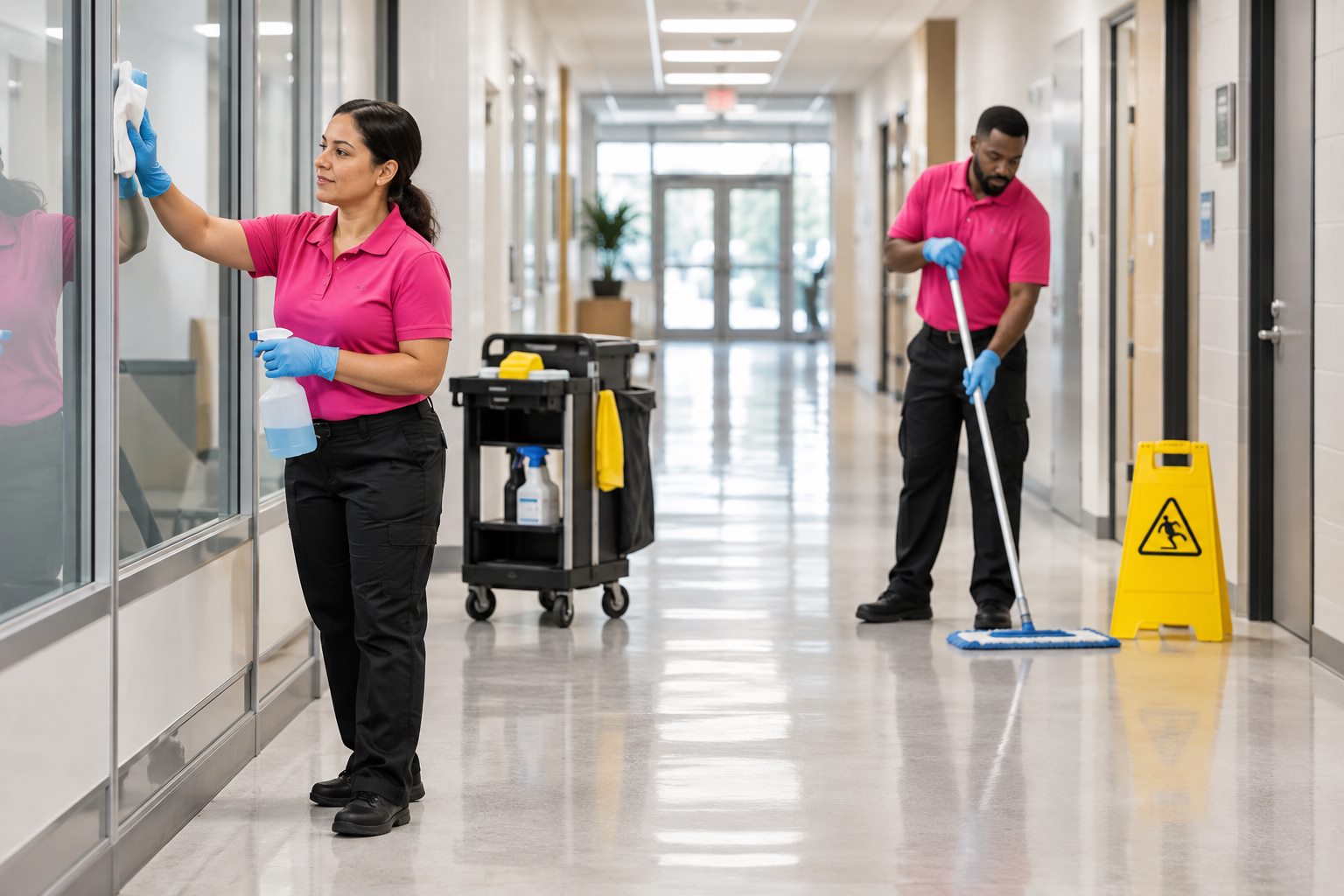
A cleaning contract should deliver more than a tidy appearance on inspection day. For office administrators and property managers in Fredericksburg, consistent results depend on a clear scope of work, routine checks, and a practical process for addressing problems. Commercial cleaning quality assurance brings these pieces together so expectations are understood and performance can be reviewed over time.
This guide explains how to establish a workable inspection system for offices, retail premises, and other commercial buildings. It is an educational resource, not a claim that any particular certification or testing system is used by Ville-Ann.
1. Begin With a Clear Cleaning Scope
Before evaluating results, document what is included in the agreement. Identify the spaces to be cleaned, task frequency, access requirements, high-touch surfaces, consumables, and any specialized work. Our guide to what janitorial services include can help facility managers distinguish routine tasks from additional services.
A room-by-room scope avoids vague expectations. For example, a restroom checklist might cover fixtures, mirrors, floors, touchpoints, waste bins, and supply replenishment, with a separate record of tasks that require periodic deep cleaning.
2. Create a Practical Commercial Cleaning Inspection Checklist
Inspect areas based on the building's use and the agreed service schedule. An office may prioritize reception areas, meeting rooms, shared kitchens, restrooms, and entryways. A medical practice may require additional procedures and coordination with its infection prevention policies.
For office-specific tasks, adapt our commercial cleaning checklist for offices. For healthcare settings, consult the medical office cleaning checklist and applicable facility protocols.
Sample inspection points:
- Entrance and lobby: Visible soil, fingerprints on accessible glass, clean floor edges, and orderly waste stations.
- Workspaces and meeting rooms: Agreed touchpoints cleaned, floors maintained, and no cleaning supplies left behind.
- Restrooms: Fixtures, partitions, and floors cleaned; bins emptied; dispensers stocked where contracted.
- Shared kitchens: Counters and sinks cleaned according to scope; waste removed; food-contact surfaces handled appropriately.
- Safety: Wet-floor signs used when necessary, walkways clear, and chemicals stored appropriately.
3. Decide How and When to Inspect
Use a combination of brief daily checks and more detailed scheduled reviews. Vary inspection times so the process captures normal service quality rather than only preparations for a planned visit. Record the date, location, issue, priority, responsible contact, and follow-up outcome.
The ISSA Clean Standards describe a framework for evaluating cleaning effectiveness through inspections and, where appropriate, objective measurements. Its institutional and commercial standard is intended for buildings such as offices, retail premises, and hotels. Routine visual checks are a practical starting point; specialized testing should be interpreted by trained personnel.
4. Track a Small Number of Useful Quality Indicators
Avoid collecting data that nobody reviews. Instead, track indicators that reflect the contract and the facility's needs:
- Completed scheduled tasks.
- Repeat issues by room or location.
- Response time for urgent requests.
- Inspection findings and their priority.
- Time taken to close corrective actions.
For example, if the same lobby entrance is repeatedly marked for visible soil, the issue may involve cleaning frequency, equipment, weather-related foot traffic, or an unclear assignment. The goal is to identify the cause rather than simply record another failed check.
5. Build a Fair Corrective-Action Process
When an inspection finds a problem, document it clearly, share the agreed standard, and set a reasonable correction deadline. Confirm completion and review recurring issues at a regular meeting. A short written log can help both the facility manager and cleaning provider avoid misunderstandings.
The ISSA Cleaning Industry Management Standard includes customer feedback, inspection records, complaint handling, and corrective action as components of quality management. These principles can inform a local facility's review process without implying that its contractor holds ISSA certification.
Quality assurance is a feedback loop
A useful review does not stop at identifying a missed task. It connects the finding to a clear standard, a responsible contact, a correction date, and a follow-up check.
6. Include Worker Safety in Quality Reviews
Quality should never come at the expense of safe work. Confirm that staff can access appropriate protective equipment, understand product instructions, and follow procedures for spills and chemical handling. Do not mix cleaning chemicals. For additional guidance, consult OSHA's cleaning industry resources.
Where a facility requires disinfection, the product label and the building's applicable protocols should determine how products are used. Appearance alone cannot prove that a surface was disinfected correctly.
7. Review the Cleaning Schedule When Building Needs Change
Traffic, weather, occupancy, and seasonal events can change the amount of cleaning a property requires. If a space is repeatedly falling short despite proper task completion, consider whether the service frequency or scope still matches actual use.
Our article on how often an office should be professionally cleaned explains factors that influence cleaning frequency. Property managers comparing providers can also use our commercial cleaning contractor selection guide to structure conversations about reporting and service expectations.
A Simple Monthly Cleaning Quality Review
- Review completed inspection checklists and recurring findings.
- Check whether previously reported issues were corrected.
- Ask occupants or department contacts about persistent concerns.
- Review changes in traffic, events, and seasonal conditions.
- Agree on any adjustments to task frequency, reporting, or scope.
Frequently Asked Questions
What is commercial cleaning quality assurance?
It is a documented approach to defining cleaning expectations, checking completed work, recording problems, and improving results over time.
How often should a commercial building be inspected?
The frequency depends on building use, risk, occupancy, and contract scope. Many facilities combine quick routine checks with more detailed periodic inspections.
Can a visual inspection prove that a surface is disinfected?
No. Appearance alone cannot establish whether a disinfection procedure was performed correctly. Follow product labels, applicable protocols, and any specialized verification requirements.
What should I do if the same cleaning problem keeps returning?
Document the pattern, review the task instructions and cleaning frequency with the provider, agree on a corrective action, and confirm whether the change works.
Discuss Your Commercial Cleaning Needs With Ville-Ann
Whether you manage an office, retail location, or multi-use property in the Fredericksburg area, a clearly defined cleaning scope makes service expectations easier to communicate. Ask Ville-Ann Janitorial & Facility Maintenance about current services, scheduling, and how quality concerns can be discussed.
Explore Ville-Ann's commercial cleaning services or request a cleaning consultation by calling (540) 370-6737.
Build a clearer cleaning quality plan
Share your facility type, traffic patterns, service schedule, and recurring concerns so the team can discuss a practical cleaning program.
Editorial note: This guide describes general quality-assurance practices. Confirm Ville-Ann's specific inspection procedures, certifications, and service guarantees before adding company-specific claims. Keyword volume and difficulty were not independently verified.