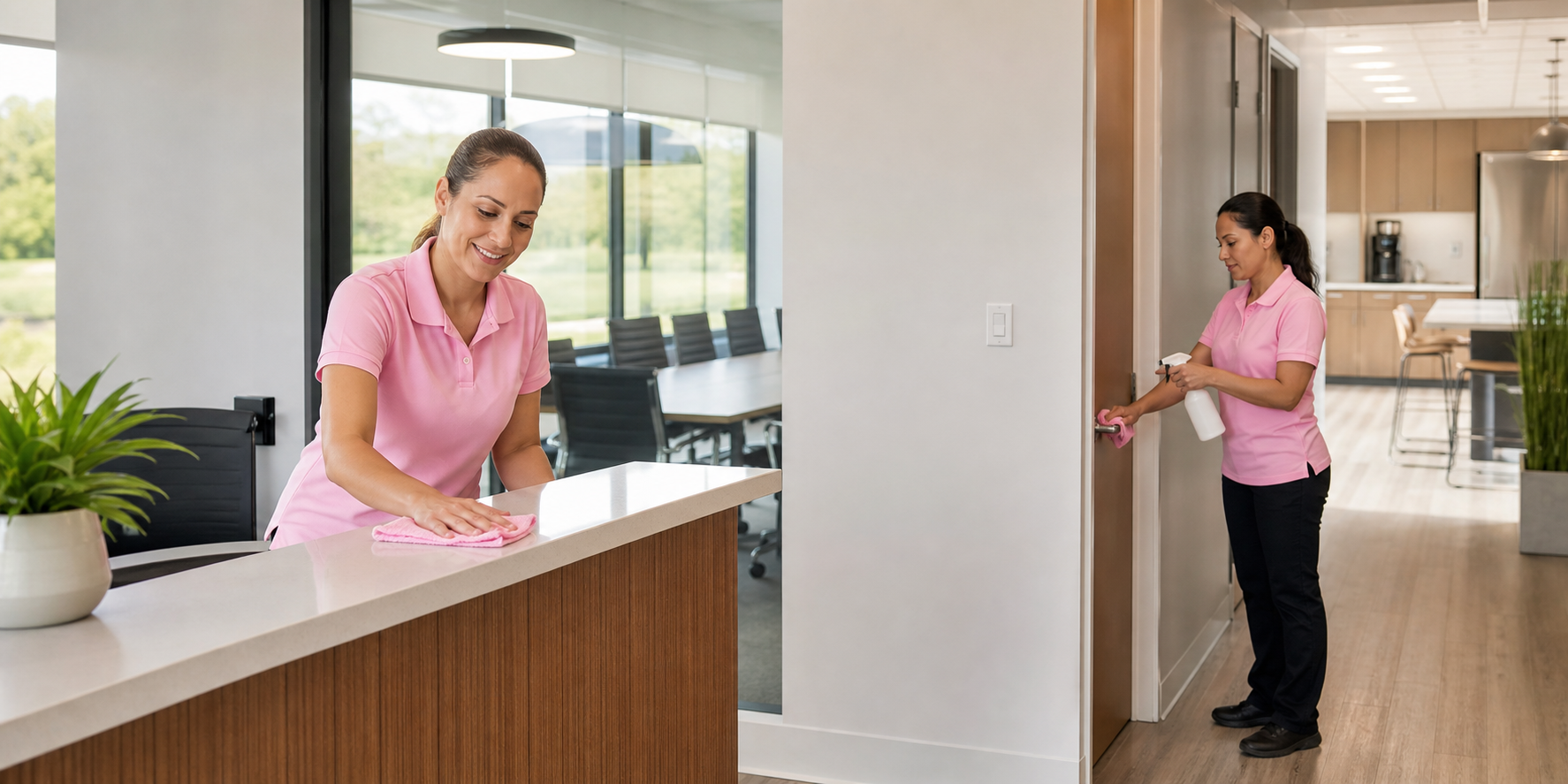
A workplace can look clean and still need more focused surface care. Dust-free desks, empty trash cans, and polished floors create a professional appearance, but cleaning, sanitizing, and disinfecting serve different purposes. Understanding the difference helps facility managers choose a practical service plan instead of treating every surface or situation the same way.
For local offices, retail spaces, healthcare support areas, schools, churches, property-managed buildings, and other facilities, commercial disinfection services in Fredericksburg, VA can support routine high-touch care, seasonal cleaning, or a response to a specific concern. The most effective plan begins with ordinary cleaning and adds sanitizing or disinfecting where the facility, traffic level, surface type, and circumstances justify it.
Ville-Ann provides sanitization and disinfection services in Fredericksburg for high-touch areas, restrooms, shared workspaces, break rooms, and other agreed priority areas.
Cleaning, Sanitizing, and Disinfecting Are Not the Same
These terms are often used interchangeably, but they describe different steps. Choosing the correct step matters because a surface may need visible soil removed before a sanitizer or disinfectant can work as intended.
What is cleaning?
Cleaning removes dirt, dust, spills, crumbs, grease, and some germs from a surface. It usually involves water, detergent, and physical action such as wiping, scrubbing, vacuuming, or mopping. Cleaning is the foundation of workplace care and should generally come before sanitizing or disinfecting when a surface is visibly soiled.
What is sanitizing?
Sanitizing lowers the number of germs on a surface to a level addressed by the product's label and intended use. It may be appropriate for selected food-contact or shared surfaces when the correct product, preparation, and procedure are used. Product directions determine where and how a sanitizer should be applied.
What is disinfecting?
Disinfecting uses an appropriate product to kill specified germs on nonporous surfaces when the product is used according to its label. Effective disinfection depends on details such as pre-cleaning requirements, surface compatibility, dilution, application method, and contact time. A quick spray followed by an immediate wipe may not meet the product directions.
Cleaning vs Sanitizing vs Disinfecting: Quick Comparison
| Process | Main purpose | Typical workplace use | Key consideration |
|---|---|---|---|
| Cleaning | Removes visible soil and debris | Routine care for desks, floors, glass, restrooms, and break rooms | Often required before sanitizing or disinfecting |
| Sanitizing | Reduces germs to the level stated for the product and use | Selected shared or food-contact surfaces, when appropriate | Follow the label for surface, dilution, and contact time |
| Disinfecting | Kills specified germs listed on the product label | High-touch nonporous surfaces and targeted response cleaning | Use the correct product and keep the surface wet for the stated contact time |
When Might a Fredericksburg Business Need Disinfection?
Not every surface needs to be disinfected during every visit. A targeted plan focuses effort where it is most useful and avoids unnecessary product use. Businesses may consider commercial disinfection in situations such as:
- High employee or visitor traffic in entrances, reception areas, meeting rooms, and shared workspaces
- Frequently touched surfaces such as handles, switches, railings, counters, shared equipment, and appliance handles
- Restrooms and break rooms used by multiple employees or visitors
- Seasonal illness concerns or an agreed response after a known workplace concern
- Preparing a facility for reopening, an event, an inspection, or a return to normal operations
- Facilities that want disinfection included within a recurring commercial or janitorial cleaning plan
The scope should reflect how the building is used. A small professional office may need focused attention on restrooms, break rooms, meeting rooms, and shared touchpoints. A busy retail or public-facing facility may need more frequent care in entrances, payment areas, counters, and customer restrooms.
Businesses seeking broader upkeep can combine targeted disinfection with Ville-Ann's commercial cleaning services.
High-Touch Areas That Often Need Extra Attention
A useful disinfection checklist follows people's movements through the building. The goal is to identify the surfaces that many hands touch, confirm that the material can tolerate the selected product, and define who is responsible for each area.
- Exterior and interior door handles, push plates, and railings
- Light switches, elevator buttons, keypads, and shared controls
- Reception counters, conference tables, chair arms, and shared desks
- Faucet handles, flush controls, dispensers, partitions, and restroom touchpoints
- Refrigerator, microwave, coffee machine, and cabinet handles in break rooms
- Shared phones, keyboards, tools, carts, and equipment when manufacturer instructions allow
For routine workplace upkeep around desks, meeting rooms, restrooms, break rooms, and floors, review Ville-Ann's office cleaning services in Fredericksburg.
Why Product Labels and Contact Time Matter
Disinfection is a process, not simply a product. The product label identifies the approved surfaces, organisms it is designed to address, dilution or preparation requirements, safety precautions, and the contact time. Contact time is the period a surface must remain visibly wet for the product to work as directed.
Using more product does not automatically improve results. The safer approach is to match the product to the surface and intended purpose, follow the label, use appropriate personal protective equipment when required, provide ventilation where directed, and avoid mixing cleaning chemicals. Electronics, natural stone, finished wood, fabrics, and other sensitive materials may require manufacturer-approved methods.
How to Build a Practical Commercial Disinfection Plan
A clear plan helps prevent missed areas, duplicated work, surface damage, and confusion between the cleaning company and the facility team.
1. Begin with the facility and traffic pattern
Identify public areas, employee-only spaces, restrooms, food areas, high-traffic routes, and surfaces shared across shifts. Note operating hours and access requirements so service can be scheduled with minimal disruption.
2. Separate routine cleaning from targeted disinfection
Define which areas need standard cleaning, which may need sanitizing, and which high-touch nonporous surfaces require disinfection. This keeps the scope understandable and supports accurate pricing.
3. Confirm products, surfaces, and procedures
Ask how products are selected, whether surfaces require pre-cleaning, how contact time is managed, and how sensitive materials are protected. The scope should be based on product labels and facility needs rather than broad promises.
4. Set the schedule and documentation expectations
Decide whether the service is one time, seasonal, event-related, or recurring. For recurring service, a site-specific checklist and a defined point of contact make it easier to communicate changes and monitor consistency.
5. Review the plan when conditions change
Changes in occupancy, operating hours, illness concerns, building use, or customer traffic may affect priorities. Review the service plan rather than assuming yesterday's scope remains the best fit.
Questions to Ask a Commercial Disinfection Company
- Which surfaces and spaces are included in the proposed scope?
- Will visible soil be cleaned before a sanitizer or disinfectant is applied?
- How do you select products for different surfaces and intended uses?
- How do you follow dilution, application, and contact-time instructions?
- What steps help protect sensitive materials and occupied spaces?
- Can disinfection be combined with recurring office, commercial, or janitorial cleaning?
- How will completed work, special concerns, and schedule changes be communicated?
- Is pricing based on square footage, priority areas, frequency, access, or a combination of factors?
Healthcare practices may also find useful context in Ville-Ann's guide to medical and healthcare facility cleaning.
Frequently Asked Questions
Is cleaning enough for every workplace surface?
Routine cleaning is essential, but selected high-touch areas or specific circumstances may justify sanitizing or disinfecting. The correct level depends on the surface, facility use, and agreed priorities.
Should a surface be cleaned before it is disinfected?
When a surface is visibly dirty, it generally needs cleaning first. Always follow the disinfectant label because it specifies any required pre-cleaning and application steps.
How often should high-touch surfaces be disinfected?
Frequency depends on traffic, how often the surface is touched, the facility type, seasonal concerns, and the product instructions. A site assessment can help establish a practical schedule.
Can disinfection be added to regular commercial cleaning?
Yes. Targeted sanitization and disinfection can be paired with office cleaning, commercial cleaning, janitorial service, or deep cleaning.
Do disinfectants work immediately?
Not necessarily. Many products require the surface to remain wet for a specific contact time. The label provides the controlling instructions.
What affects the cost of commercial disinfection services?
Pricing may depend on facility size, number of priority areas, service frequency, access requirements, surface types, and whether disinfection is combined with other cleaning services.
Request Commercial Disinfection Services in Fredericksburg, VA
A well-planned program uses ordinary cleaning as the foundation and applies sanitizing or disinfecting where it is appropriate. That approach supports a cleaner workplace, protects surfaces, and gives employees, customers, and facility contacts a clear understanding of what the service includes.
Need a customized plan? Request a free cleaning and disinfection quote from Ville-Ann or call (540) 370-6737 to discuss your facility, schedule, and priority areas.
Ready to plan high-touch surface care?
Tell Ville-Ann about your facility, traffic patterns, priority areas, and cleaning schedule.