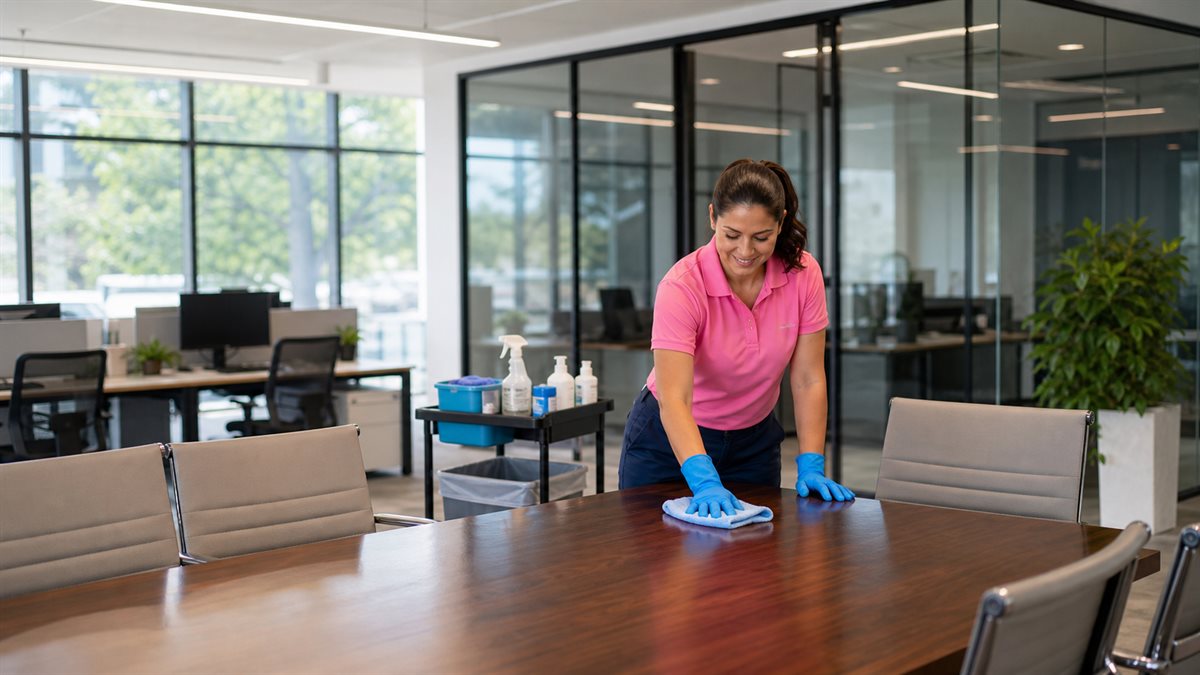
Choosing the right corporate office cleaning services shapes how employees feel walking in each morning, how clients perceive your business the moment they step through the door, and how many sick days your team takes over the course of a year.
Yet office cleaning is often treated as an afterthought: a line item handled by whoever has time, rather than a strategic part of running a healthy, productive workplace.
This guide breaks down what professional corporate office cleaning should look like, so facility managers and business owners can set expectations, evaluate vendors, and protect their space with confidence.
Why Office Cleanliness Is a Business Issue, Not Just an Appearance Issue
Poor cleaning habits carry real costs. Dust and allergens contribute to respiratory irritation and lower concentration. High-touch surfaces like doorknobs, keyboards, and shared kitchen equipment can spread colds and flu through an office. A neglected lobby or conference room can undercut a sales pitch before anyone says a word.
On the flip side, a well-maintained office supports employee wellbeing, reduces absenteeism, and reinforces brand credibility with every client visit. Cleaning is infrastructure, and it deserves the same intentional planning as your IT systems or your security protocols.
Daily Cleaning Tasks Every Office Needs
Some tasks cannot wait for a weekly deep clean. These should happen every business day in most corporate office environments:
- Trash and recycling removal from offices, break rooms, and restrooms
- Restroom sanitation, including restocking soap, paper towels, and toilet paper
- High-touch point disinfection for door handles, light switches, elevator buttons, and shared equipment
- Kitchen and break room wipe-downs, including countertops, sinks, and microwave interiors
- Floor care, including vacuuming high-traffic carpet areas and spot-mopping hard floors
- Glass and entryway cleaning to keep the first impression sharp
Weekly and Monthly Tasks That Prevent Bigger Problems
Daily upkeep handles the visible mess. Weekly and monthly service catches what builds up quietly, including full carpet vacuuming and edge cleaning across all areas, not just walkways.
These recurring tasks should also include dusting vents, blinds, and high surfaces where allergens accumulate; interior and accessible exterior window cleaning; deep restroom sanitation; and furniture or upholstery cleaning in lobbies, conference rooms, and break areas.
Skipping these steps does not save money. It defers cost. Dirt ground into carpet fiber, mineral buildup in restrooms, and neglected HVAC vents all get more expensive to fix the longer they are ignored.
Quick Takeaway
Daily cleaning keeps the office usable. Weekly, monthly, and seasonal tasks protect the surfaces, air quality, and professional appearance that daily cleaning alone cannot maintain.
Quarterly and Seasonal Deep Cleaning
A handful of tasks are best handled a few times a year rather than monthly. Deep carpet extraction removes embedded soil and restores appearance, while hard floor stripping and waxing helps protect surfaces and maintain shine.
Air vent and duct dusting can support indoor air quality. Window washing is especially useful before major client events, annual reviews, or high-visibility meetings. Furniture rotation and deep upholstery treatment can also extend the life of common-area seating.
Scheduling these projects around slower business periods, such as a holiday week or a quarter-end lull, minimizes disruption to daily operations.
Choosing the Right Cleaning Products and Methods
Not all cleaning is equal. A few standards are worth insisting on from any vendor. EPA-registered disinfectants should be used for high-touch and restroom surfaces, not just general-purpose cleaners.
Color-coded cloths and equipment help prevent cross-contamination between restrooms, kitchens, and workspaces. Low-VOC, green-certified products are also helpful where possible, especially in enclosed office environments with limited airflow. HEPA-filtration vacuums can keep dust and allergens from being recirculated back into the air.
Setting a Cleaning Schedule That Actually Fits Your Office
The right frequency depends on foot traffic, square footage, and industry. A 15-person consulting office has very different needs than a 200-person call center or a healthcare-adjacent facility with stricter sanitation requirements.
A good starting framework is daily service for restrooms, kitchens, trash, and high-touch surfaces; 2-3 times weekly service for general office floors and common areas in mid-sized offices; weekly deep tasks like dusting, glass cleaning, and detailed floor care; and quarterly deep cleans for carpets, vents, and upholstery.
If you are unsure where your office falls, a walkthrough with a commercial cleaning provider can translate your space and traffic patterns into a realistic schedule.
What to Look for in a Commercial Cleaning Partner
When evaluating vendors, go beyond price per square foot. Consistency matters, especially when you want the same trained team instead of rotating unfamiliar staff.
Insurance and bonding protect your property and liability. Clear communication channels make it easier to report issues or request adjustments. A transparent scope of work ensures daily, weekly, and quarterly tasks are documented, not assumed. Flexibility matters too, because service should be able to scale around office growth, events, or seasonal needs.
Final Thoughts
Office cleaning is easy to overlook until it becomes a visible problem, and by then, it usually costs more to fix than it would have to maintain. Building a clear, tiered cleaning schedule and holding your provider to defined standards protects your team's health, your space's appearance, and the impression you leave on every client who walks through the door.
Looking for corporate office cleaning services you can rely on? Ville-Ann Janitorial & Facility Maintenance builds tailored commercial cleaning programs around your office's actual traffic and needs.
Learn more about our office cleaning services in Fredericksburg, VA, or explore our commercial cleaning programs for larger facilities.
Ready for a healthier, client-ready office?
Schedule a walkthrough with Ville-Ann and get a custom cleaning plan built around your office, traffic level, and service needs.
Frequently Asked Questions
How often should a corporate office be professionally cleaned?
Most corporate offices benefit from daily service for restrooms, kitchens, trash, and high-touch surfaces, with 2-3 times weekly cleaning for general floors and common areas. Higher-traffic offices or client-facing spaces may need daily full-service cleaning, while smaller offices can often manage with 2-3 visits per week plus periodic deep cleaning.
What is included in corporate office cleaning services?
A comprehensive corporate office cleaning program typically covers restroom sanitation, trash removal, high-touch disinfection, floor care, kitchen and break room cleaning, glass and entryway maintenance, and scheduled deep cleaning of carpets, vents, and upholstery.
How much do corporate office cleaning services cost?
Pricing depends on square footage, cleaning frequency, and the scope of services required. Most providers price per square foot or offer a flat monthly rate based on a walkthrough of your space. Requesting an on-site quote is the most accurate way to get pricing specific to your office.
Should we hire an in-house cleaning staff or outsource to a commercial cleaning company?
Outsourcing to a commercial cleaning company generally costs less than hiring, training, and managing in-house staff, and it removes the burden of covering absences, supplies, and equipment. It also gives you access to trained teams, proper insurance, and consistent quality standards without added HR overhead.
How do I know if my current office cleaning is good enough?
Warning signs of inadequate cleaning include lingering odors, visible dust buildup on surfaces and vents, stained or worn carpet, restrooms that need attention shortly after servicing, and employee complaints about cleanliness. If any of these are recurring, it may be time to reassess your provider's scope of work or switch to a more thorough service plan.