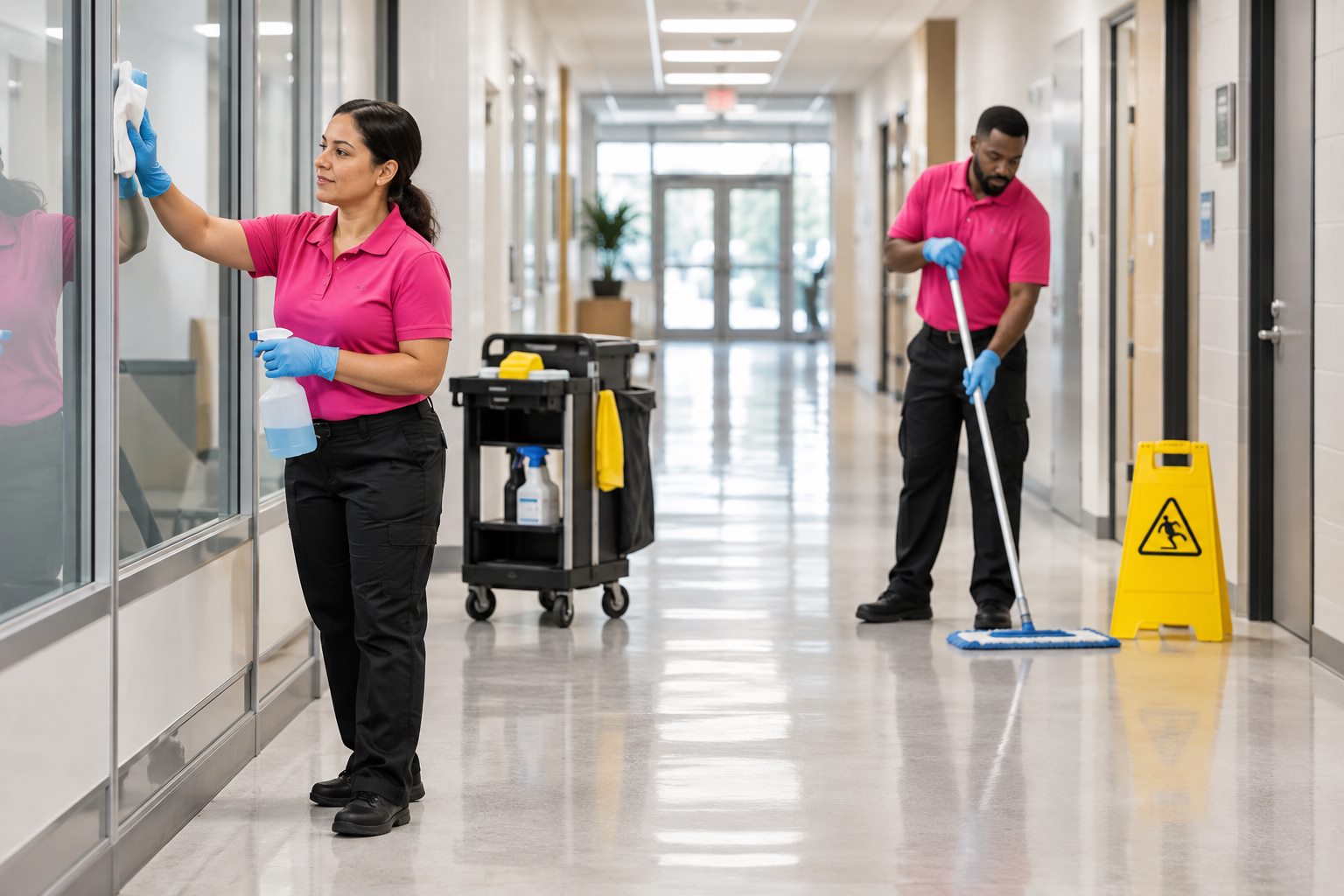
A clean workplace is not a one-time achievement. For busy offices, retail locations, medical practices, and shared commercial buildings, common areas may need attention throughout the day as well as after closing. Two approaches frequently come up when planning that support: day porter services and nightly janitorial cleaning.
They serve different purposes. Understanding the difference can help Fredericksburg business owners and facility managers set an appropriate cleaning schedule, define expectations, and request comparable proposals. You can also review Ville-Ann's guide to what janitorial services include for a broader overview of recurring commercial cleaning tasks.
What Are Day Porter Services?
A day porter is a cleaning or facility-support worker who performs agreed-upon tasks while a building is occupied. Rather than waiting until the end of the day, a porter helps maintain the appearance and usability of high-traffic areas as needs arise.
Depending on the contract and building, typical duties may include:
- Checking and restocking restrooms.
- Cleaning visible spills and responding to routine messes.
- Maintaining entrances, lobbies, and reception areas.
- Emptying frequently used waste and recycling bins.
- Attending to shared kitchens, break rooms, and meeting spaces.
- Keeping public-facing areas presentable during operating hours.
A day porter is not a substitute for specialist maintenance, regulated healthcare cleaning, or emergency-response personnel. The written scope should identify what the porter can handle, what requires escalation, and which supplies or equipment are provided.
What Does Nightly Janitorial Cleaning Include?
Nightly janitorial cleaning generally takes place after staff and visitors leave. It is often suited to tasks that are disruptive during working hours, such as comprehensive floor cleaning, vacuuming, detailed restroom cleaning, dusting, and scheduled cleaning of workstations and common areas.
A typical after-hours scope may include:
- Vacuuming carpets and rugs.
- Sweeping and mopping hard-surface floors.
- Cleaning and disinfecting contracted restroom surfaces.
- Dusting furniture, ledges, and accessible fixtures.
- Emptying and relining wastebaskets.
- Cleaning shared kitchens, counters, sinks, and appliance exteriors.
- Wiping agreed high-touch surfaces and cleaning interior glass.
The precise scope depends on the facility and written agreement. If you are deciding how often to schedule these tasks, Ville-Ann's office cleaning frequency guide explains how employee numbers, visitor traffic, and shared spaces affect cleaning needs.
Day Porter vs Nightly Janitorial Cleaning: Key Differences
| Factor | Day Porter | Nightly Janitorial |
|---|---|---|
| Timing | During occupied hours | After business hours |
| Primary purpose | Ongoing upkeep and quick response | Planned, more thorough cleaning |
| Typical focus | Entrances, restrooms, spills, and shared spaces | Floors, surfaces, restrooms, and waste removal |
| Best fit | High-traffic or visitor-facing facilities | Facilities needing routine end-of-day cleaning |
| Common limitation | Less time for disruptive deep cleaning | Cannot address issues as they arise during the day |
The two services can work together. A daytime porter can keep high-use areas under control while an after-hours janitorial team completes the more detailed cleaning that is easier when the building is empty.
Which Option Fits Your Business?
Offices and Shared Workspaces
An office with steady visitor traffic may benefit from daytime checks of restrooms, kitchens, and reception areas, followed by a more detailed clean after closing. Smaller offices with predictable use may only need a regular after-hours schedule.
Use Ville-Ann's commercial office cleaning checklist to identify which tasks belong on daily, weekly, and periodic schedules.
Retail and Customer-Facing Properties
For a busy store or showroom, entrance dirt, litter, and restroom use can change quickly during opening hours. A daytime maintenance plan can address these issues without interrupting customers, while after-hours cleaning can handle more extensive work.
Medical Offices and Specialized Settings
Healthcare environments require site-specific cleaning protocols, appropriate products, staff training, and clear responsibility for clinical versus nonclinical areas. A generic day porter arrangement should not be presented as a substitute for infection-prevention procedures or regulated clinical cleaning.
For room-by-room considerations, see Ville-Ann's medical office cleaning checklist. The CDC environmental infection control guidance provides additional guidance for healthcare settings.
How to Build an Effective Combined Cleaning Schedule
- Map building traffic. Identify when restrooms, entrances, break rooms, and customer areas are busiest.
- Separate routine and responsive tasks. Specify which duties happen at set times and which require attention when issues arise.
- Define the scope in writing. Include cleaning frequencies, supplies, access requirements, reporting, and escalation procedures.
- Account for worker safety. Provide suitable products, equipment, and training; avoid creating unrealistic expectations around hazardous spills or specialist tasks.
- Review quality regularly. Use checklists and periodic walkthroughs to identify missed areas and adjust the schedule.
The OSHA cleaning industry resources explain why employers should train workers on chemical hazards and safe handling. For disinfectant use, consult EPA guidance on registered disinfectants and follow the product label.
Daytime upkeep and after-hours cleaning solve different problems
Choose a day porter when the building needs visible attention while it is open. Choose nightly janitorial service when the priority is a consistent, detailed clean after occupants leave. Many high-traffic facilities benefit from both.
Questions to Ask Before Requesting a Quote
Ask each provider to explain both the daytime and after-hours scope in plain language. These questions can help you compare proposals:
- What tasks are included in the daytime and after-hours scopes?
- How often will high-traffic restrooms and entrances be checked?
- Who supplies consumables, equipment, and approved cleaning products?
- How are missed tasks, spills, and unexpected requests documented?
- Can the schedule change during seasonal peaks or special events?
- What training and safety procedures apply to the building?
- Which work is included in the recurring price and which services are billed separately?
For a broader comparison of proposals, read Ville-Ann's guide on how to choose a commercial cleaning contractor in Fredericksburg.
Frequently Asked Questions
Is a day porter the same as a janitor?
The roles can overlap, but day porter typically refers to ongoing daytime upkeep in occupied buildings. Janitorial cleaning often refers to a scheduled cleaning scope, frequently completed after hours.
Do small offices need a day porter?
Not always. The answer depends on visitor traffic, restroom use, shared spaces, staffing, and the level of presentation the business needs throughout the day.
Can a business use both services?
Yes. A combined schedule can provide daytime attention to busy areas and more extensive cleaning when the building is empty.
How much do day porter services cost in Fredericksburg?
Costs depend on hours, building size, staffing, service frequency, and task scope. Request a written, site-specific quote rather than relying on a generic rate.
Request a Cleaning Plan for Your Fredericksburg Facility
The right approach begins with your building's operating hours, traffic patterns, and cleaning priorities. Ville-Ann Janitorial & Facility Maintenance serves the Fredericksburg area. To discuss available service options and request a tailored proposal, contact Ville-Ann or call (540) 370-6737. Confirm current day porter availability and the proposed scope directly with the team.
Build a schedule that fits your facility
Share your operating hours, traffic patterns, high-use areas, and cleaning priorities so the team can discuss a practical commercial cleaning plan.