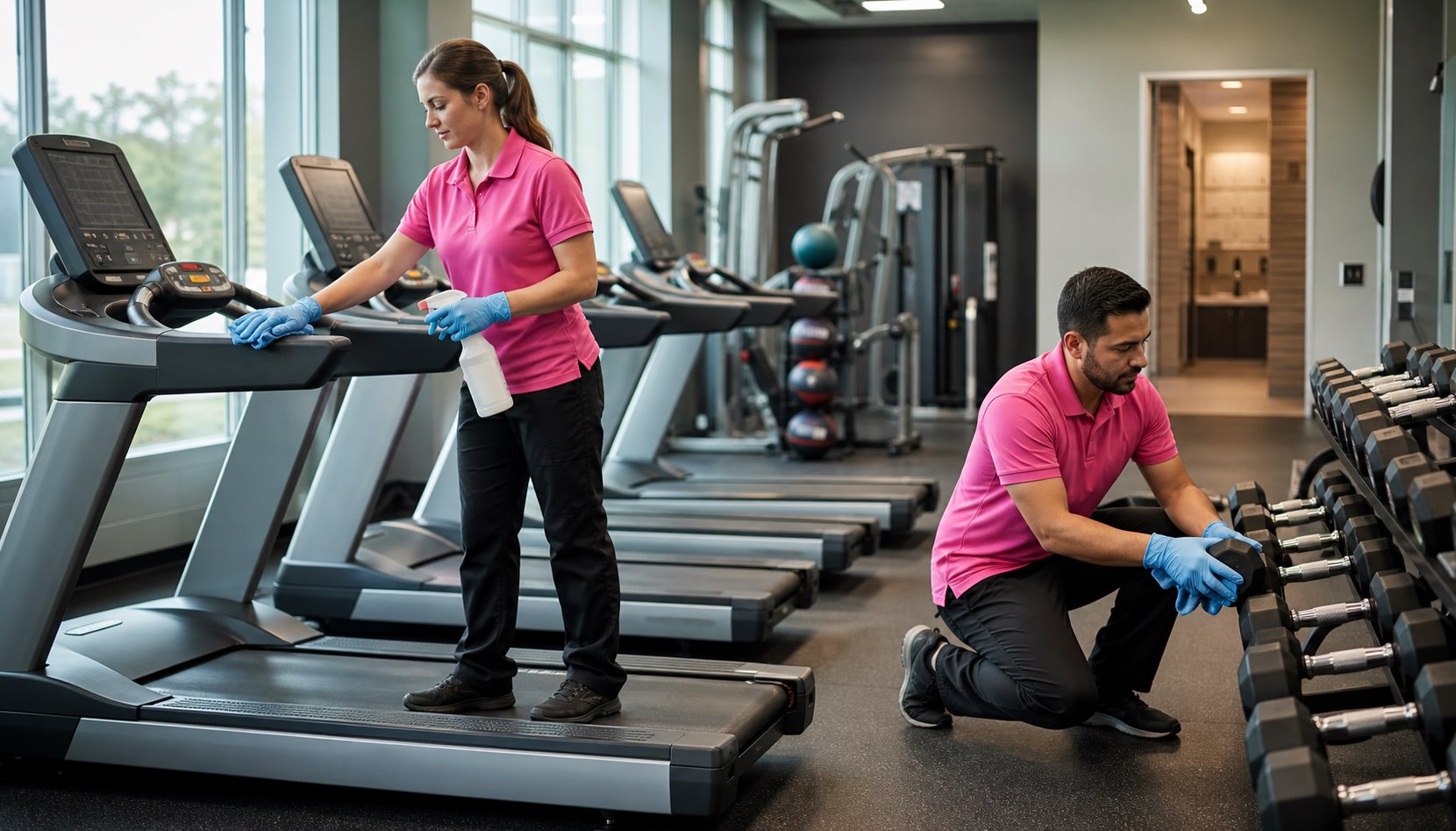
Members decide whether they trust a gym before they touch a single piece of equipment. They notice smudges on treadmill screens, the smell drifting out of the locker room, and whether a wipe station is stocked.
A gym is not an office, and it cannot be cleaned like one. Sweat, humidity, heavy foot traffic, and shared equipment create sanitation challenges that a standard janitorial routine is not built to handle. Bacteria and fungi can multiply quickly on unprotected surfaces, which is why odors in poorly maintained locker rooms can return even after a quick mop.
For gym owners and fitness studio operators in Fredericksburg, here is what a cleaning program actually needs to cover and how Ville-Ann Janitorial & Facility Maintenance builds gym-specific service plans instead of applying a generic office checklist to a fitness floor.
Why Gyms Need a Different Cleaning Standard Than Offices
An office desk may be touched by one or two people a day. A single piece of cardio equipment can be touched by dozens of members during a single peak hour, each one leaving sweat, skin cells, and bacteria behind. Locker rooms add another layer entirely: warm, wet, shared surfaces create an environment where mold, mildew, and bacteria can thrive.
A quick surface wipe often spreads residue across the top layer instead of breaking it down. That is the gap a generalist commercial cleaning crew tends to miss. Office-grade cleaning protocols were not built for rubber flooring, upholstered benches, free weights, or a shower room that needs close attention every day.
High-Risk Zones in a Gym or Fitness Studio
Every high-use gym area needs a different product, method, and frequency. Treating them all the same way is how gyms end up with odors they cannot explain and member complaints they cannot ignore.
- Cardio equipment handles, displays, and seats touched by dozens of members per hour.
- Free weights and weight machines where sweat and skin oils accumulate on high-touch grips.
- Locker rooms and showers, which are high-risk zones for mold, mildew, odor, and skin-contact concerns.
- Yoga mats, foam rollers, and studio props that can trap sweat and bacteria in porous surfaces.
- Benches, seating, and upholstered areas that need more than a fast wipe-down to stay sanitary.
- Drains and grout lines where hair, soap scum, and standing water can create odor and mold conditions.
Why Dwell Time Is the Step Most Gyms Skip
Disinfecting a surface correctly is not just about the product. It is about contact time. Many EPA-registered disinfectants need to stay visibly wet on a surface for a required dwell time before they can work as intended. If staff spray and wipe immediately because it feels faster, the chemical never gets the chance to do its job.
Sweat, chalk, and skin oils can also interfere with disinfection if they are not removed first. The correct sequence is to clear visible residue with a microfiber cloth, apply the disinfectant, and let it sit for the required contact time before the equipment goes back into use.
Gym Cleaning Tip
Post-workout wipe-downs help, but they do not replace a professional cleaning schedule for locker rooms, rubber flooring, drains, upholstery, and high-touch equipment.
A Realistic Daily, Weekly, and Monthly Cleaning Schedule
Daily
- Disinfect cardio equipment handles, displays, and seats.
- Wipe down and disinfect free weights and machine grips.
- Mop and disinfect locker room floors, showers, and restroom fixtures.
- Clear hair and debris from floor drains.
- Empty trash and restock soap, paper towels, and wipe stations.
Weekly
- Deep-scrub rubber flooring, including underneath movable mats.
- Steam-clean upholstered benches and seating areas.
- Scrub shower tile and grout to stop mold and mildew before they spread.
- Vacuum locker interiors and wipe down exteriors.
Monthly
- Deep clean HVAC filters and check ventilation in locker rooms and studio spaces.
- Inspect caulking and corners in showers for early signs of mold.
- Complete a full facility walkthrough focused on odor sources, not just visible dirt.
Routine work can borrow some structure from a commercial cleaning checklist, but gyms need more frequent disinfection and moisture-control steps than a standard office.
Why Outsourcing Makes Sense for Gyms and Fitness Studios
Most gym owners already know cleanliness affects retention. The challenge is usually bandwidth. Front desk staff and trainers are focused on members, not disinfectant dwell times, grout maintenance, drain cleaning, and locker room protocols.
A professional janitorial partner brings equipment-safe disinfectants that will not damage rubber flooring or upholstery, a schedule that holds even when staff are busy, and a locker room protocol built specifically around moisture control.
For bigger resets, scheduled deep cleaning service can help address buildup, corners, fixtures, vents, and detailed work that day-to-day cleaning cannot fully reach.
What Ville-Ann Includes in Gym & Fitness Centre Cleaning Service
Ville-Ann Janitorial & Facility Maintenance builds cleaning plans around how a gym operates, not a generic office checklist. Every service plan for a Fredericksburg-area gym or fitness studio can include:
- EPA-registered, equipment-safe disinfectants applied with proper contact time.
- Zone-specific protocols for cardio equipment, free weights, and studio spaces.
- Daily locker room and shower sanitation to control moisture, mold, and odor.
- Flexible scheduling around peak hours, early-morning openings, and 24-hour access.
- Odor treatment that breaks down organic residue instead of masking it.
- Background-checked, trained cleaning staff experienced in fitness facility protocols.
Whether you operate a boutique studio, a 24-hour fitness centre, or a multi-location gym, Ville-Ann works around member traffic patterns and facility needs.
Keep your gym clean where members notice most
Schedule a walkthrough with Ville-Ann and build a gym cleaning plan around shared equipment, locker rooms, rubber flooring, showers, and peak traffic.
Frequently Asked Questions
How often should gym equipment be disinfected?
High-touch gym equipment such as treadmill handles, displays, seats, free weights, and machine grips should be disinfected daily and more often during peak member traffic.
Why is disinfectant dwell time important in gyms?
Disinfectants need to stay visibly wet for their required contact time to work. If surfaces are sprayed and wiped immediately, the product may not fully sanitize shared equipment.
What areas of a gym need the most cleaning attention?
Cardio equipment, free weights, machine grips, locker rooms, showers, rubber flooring, mats, drains, grout lines, and upholstered benches all need zone-specific cleaning.
Can gym cleaning happen outside peak workout hours?
Yes. A professional gym cleaning plan can be scheduled around peak hours, early-morning openings, evening classes, overnight access, and 24-hour facility traffic patterns.