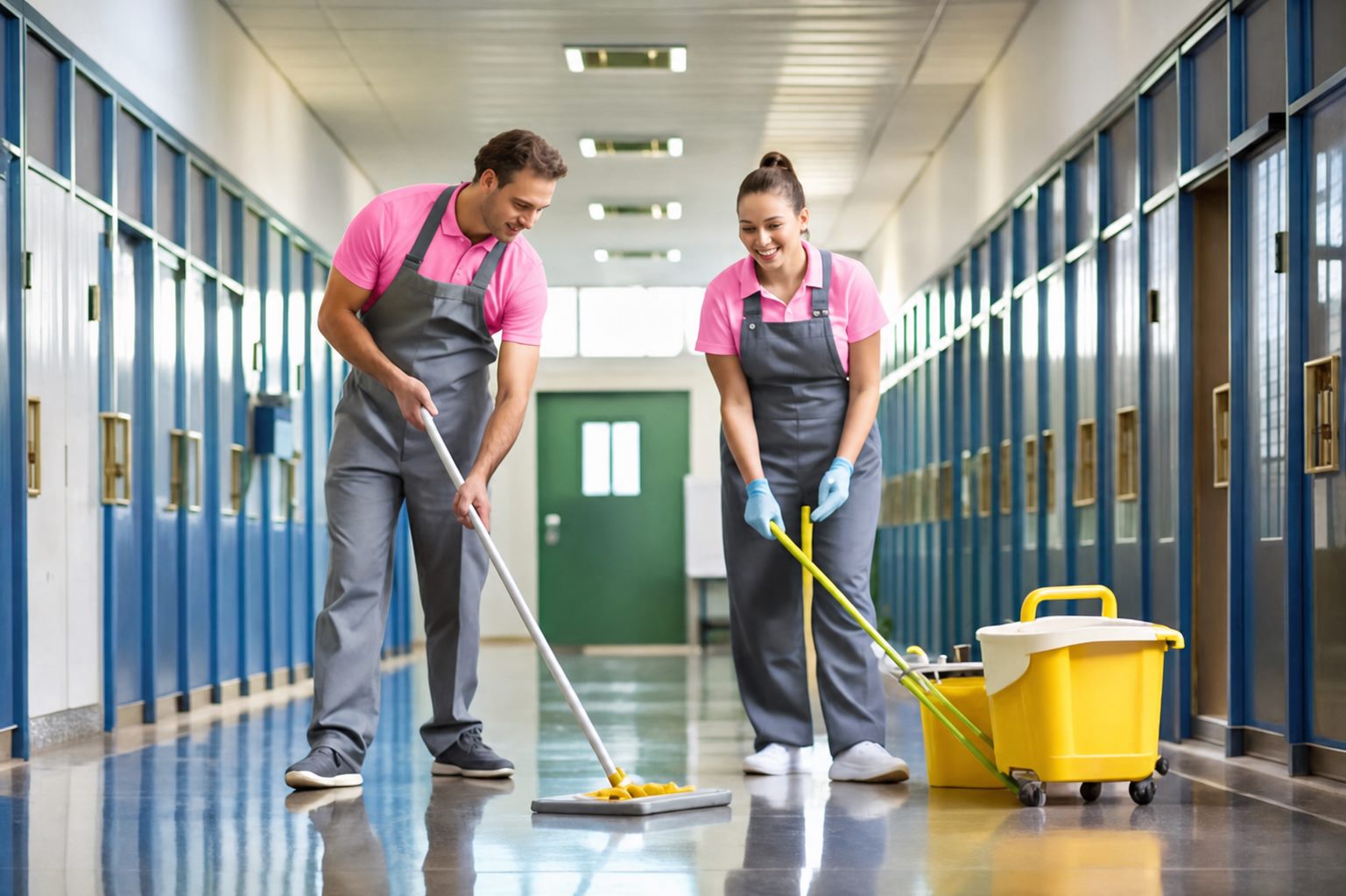
Schools carry a different kind of cleaning responsibility than a typical office. Hundreds of students and staff move through the same classrooms, restrooms, and cafeterias every day, which means germs spread faster, surfaces wear down quicker, and the standard for cleanliness has to be higher.
That higher standard is not just about appearances. It directly affects health, attendance, comfort, and the way families and staff experience the building.
If your school or district is evaluating school cleaning services this year, here is what a reliable janitorial partner should actually cover, and what to look for before signing a contract.
Why Schools Need a Different Cleaning Standard
A school building functions more like a small city than a single office. Classrooms, cafeterias, gymnasiums, restrooms, and hallways all have different traffic patterns and different risk levels for spreading illness.
A cleaning plan built for a corporate office simply does not hold up in a school environment. The frequency, the products used, and the areas of focus all need to shift around students, staff, daily schedules, and seasonal breaks.
Key Areas a School Cleaning Service Should Cover
Professional school cleaning services should combine visible upkeep with health-focused sanitation. The best programs are clear about what happens daily, what happens weekly, and what is reserved for deeper seasonal work.
Daily Sanitation of High-Contact Areas
High-contact surfaces should be part of every school cleaning routine, especially during cold, flu, and allergy seasons. Daily service should include:
- Disinfecting desks, door handles, and light switches
- Sanitizing restrooms multiple times throughout the school day
- Cleaning cafeteria tables and food-service surfaces between meal periods
- Removing trash and recycling from classrooms and common areas
Floor Care for Heavy Foot Traffic
School floors work hard. Hallways, entryways, gymnasiums, cafeterias, and classrooms collect dirt quickly, especially during rainy weather, sports seasons, and high-traffic arrival and dismissal periods.
- Daily sweeping and mopping of hallways and entryways
- Regular vacuuming of carpeted classrooms and offices
- Periodic floor stripping and waxing in gymnasiums and hallways
For buildings with older flooring or heavy hallway traffic, planned floor stripping and waxing can help restore shine, reduce wear, and keep the facility looking cared for between major breaks.
Illness Prevention and Seasonal Deep Cleaning
Routine cleaning handles the day-to-day mess. Schools also need deeper resets that target buildup, shared equipment, vents, corners, and surfaces that are difficult to address while classes are in session.
- Disinfecting shared equipment in computer labs, libraries, and gym areas
- Seasonal deep cleaning during breaks to reset the building
- Air vent and HVAC-adjacent dusting to support air quality
Quick Takeaway
Schools need a layered cleaning plan: daily high-touch sanitation, regular floor care, and deeper seasonal work scheduled around the academic calendar.
After-Hours and Non-Disruptive Scheduling
Most school cleaning happens after students and staff leave for the day, or early in the morning before arrival, so classroom instruction is never interrupted. A dependable cleaning company should be able to plan around dismissal, after-school activities, parent nights, sports events, teacher workdays, and school breaks.
What to Ask Before Hiring a School Cleaning Company
Not every commercial cleaning company is equipped to work in an educational setting. Before signing a contract, it is worth confirming:
- Are staff background-checked, given the presence of minors on campus?
- Can the schedule flex around school hours, events, and breaks?
- Are cleaning products safe for use in spaces with children, including student allergy considerations?
- Does the company have experience with multi-building campuses or districts?
These are similar questions worth asking any janitorial provider. Our guide on how to choose a commercial cleaning company in Fredericksburg, VA covers the broader vetting process in more detail.
Building a Cleaning Routine Around the School Calendar
A strong school cleaning plan typically layers together daily upkeep, weekly deeper cleaning, and seasonal resets timed around school breaks.
Daily and weekly tasks often follow a similar structure to what we outline in our commercial cleaning checklist for offices, adjusted for higher-traffic school environments and more frequent restroom, hallway, and cafeteria use.
Seasonal deep cleaning, typically done over winter, spring, and summer breaks, covers the kind of reset included in a full deep cleaning service. This gives classrooms, shared spaces, and common areas a cleaner starting point before students return.
Partner with a School Cleaning Company That Understands the Difference
Ville-Ann Janitorial & Facility Maintenance provides reliable, scheduled cleaning services for schools and educational facilities throughout Fredericksburg, VA. Contact us to discuss a cleaning plan built around your school's calendar, building layout, and daily needs.
Keep your school clean without disrupting the day
Schedule a walkthrough with Ville-Ann and build a school cleaning plan around classrooms, cafeterias, restrooms, events, and seasonal breaks.
Frequently Asked Questions
How often should schools be professionally cleaned?
High-touch areas like restrooms and cafeterias should be cleaned daily, with weekly deep dusting and vacuuming, and full seasonal deep cleans during school breaks.
Are school cleaning products different from standard commercial cleaning products?
Yes. Schools often require products that are safe for children, low-odor, and effective against common illness-causing germs without harsh chemical exposure.
Can a cleaning company work around a school's schedule?
Yes. Most school cleaning is done after hours or early morning specifically to avoid disrupting classes, with deeper work reserved for breaks.
Do school cleaning companies need special certifications?
While requirements vary by district, background-checked staff and experience with educational facilities are strongly recommended when vetting a provider.