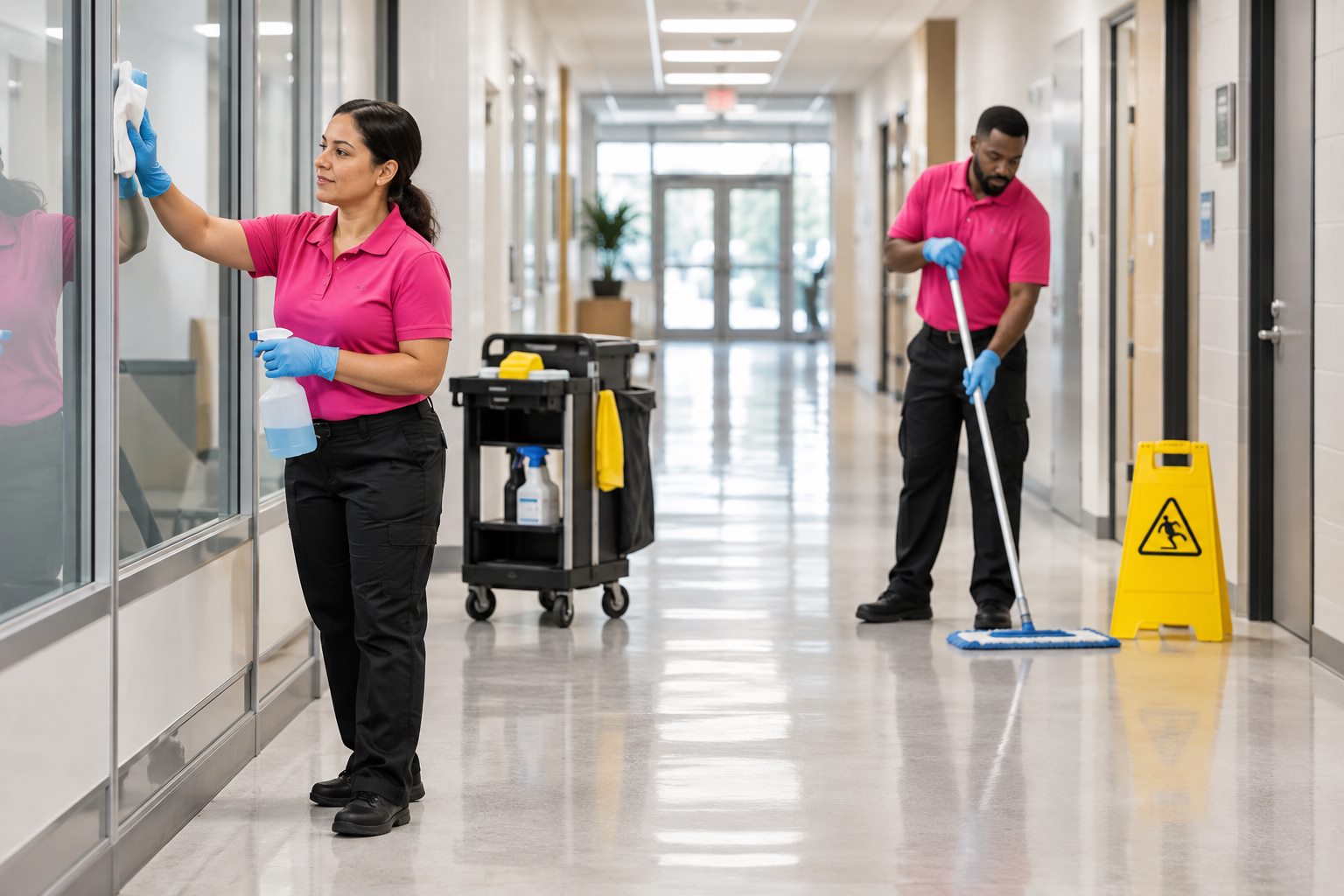
A cleaning schedule that works in a dry week may need adjusting after heavy rain, high pollen counts, or winter weather. For Fredericksburg business owners and facility managers, a seasonal commercial cleaning checklist helps address tracked-in debris, moisture, busy entrances, and changing use of shared spaces.
Seasonal planning also makes routine cleaning more predictable instead of waiting for visible buildup. Start with a baseline commercial office cleaning checklist, then adjust the frequency and scope for your building's traffic, flooring, and weather exposure. The checklist below is a planning guide, not a claim that every property needs the same schedule.
Why Commercial Cleaning Should Change With the Seasons
Seasonal conditions affect what people track into a building, how quickly entrances become dirty, and which areas need extra attention. Spring may reveal winter floor wear. Summer humidity can make odors and dampness more noticeable. Fall brings leaves and extra debris. Winter often adds wet entrances, mats, and slip-prevention concerns.
A practical plan connects the cleaning scope to real building conditions: visitor traffic, staff schedules, floor materials, event calendars, and problem areas from the previous season.
Spring: Reset After Winter
- Inspect entrance mats and the floor beneath them for trapped grit and moisture.
- Detail-clean lobby corners, baseboards, interior glass, and hard-to-reach dust collection points.
- Review carpet and hard-floor condition after months of wet footwear and tracked-in debris.
- Clean shared desks, meeting rooms, and break areas based on actual use.
- Check for signs of leaks or persistent dampness and refer building repairs to the appropriate maintenance professional.
For facilities planning a deeper reset, compare routine work with what a professional deep cleaning service includes. Schedule specialty work when spaces can be safely closed or access controlled.
Summer: Watch Humidity, Traffic, and Odors
- Increase checks of restrooms and break rooms during peak occupancy.
- Keep entrances free of dust and debris brought in by frequent visitors.
- Report condensation, damp carpet, or recurring odors promptly; cleaning alone cannot fix a moisture source.
- Coordinate floor cleaning around events, deliveries, and staff shifts.
- Store and use cleaning products according to their labels and building procedures.
The EPA's moisture-control guidance explains why controlling the source of dampness matters for building maintenance.
Fall: Prepare Entrances and High-Traffic Spaces
- Check entry mats for fit, grip, and cleaning needs before wetter weather.
- Remove leaves and tracked-in dirt from entry areas while keeping pedestrian routes clear.
- Review cleaning schedules for holiday traffic, meetings, and tenant events.
- Assess whether carpet care or hard-floor maintenance is needed before winter.
- Document recurring trouble spots and update the cleaning scope with your provider.
The EPA's entry mat guidance explains how appropriately designed mats help capture soil and moisture before they spread indoors. If your building needs broader preventive work, see Ville-Ann's facility maintenance guide.
Winter: Focus on Moisture and Slip Prevention
- Inspect entrances frequently after rain, snow, or ice.
- Keep mats flat, clean, and dry enough to perform their intended function.
- Arrange prompt response to wet spots and spills, with appropriate warning and access controls during cleaning.
- Coordinate exterior snow and ice removal with qualified personnel as needed.
- Review cleaning frequency for lobbies, corridors, and other high-use walking surfaces.
OSHA's walking-working surfaces requirements address clean, orderly walking areas and keeping floors dry to the extent feasible. OSHA's winter weather guidance also emphasizes timely attention to snow and ice on walking surfaces.
Seasonal cleaning is a planning habit
Use each season as a prompt to review entrances, floors, restrooms, shared spaces, and recurring complaints before small issues become visible problems.
A Simple Year-Round Cleaning Review
- Daily: Check restrooms, touchpoints, waste areas, and entrances according to occupancy.
- Weekly: Review recurring complaints, floor appearance, and supplies.
- Monthly: Inspect mats, corners, interior glass, and less-visible areas.
- Seasonally: Update the scope based on weather, visitor traffic, flooring condition, and scheduled events.
If you are deciding how often to schedule service, use Ville-Ann's guide to office cleaning frequency as a starting point. For more formal service monitoring, review the cleaning scope and inspection expectations with your contractor. Ville-Ann's commercial cleaning quality assurance guide can help structure that conversation.
Frequently Asked Questions
How often should commercial buildings deep clean?
There is no universal seasonal rule. Frequency depends on building traffic, floor materials, routine cleaning quality, and any special hygiene requirements. Inspect conditions and schedule additional work where it is needed.
Why is winter entrance cleaning important?
Rain, snow, and tracked-in moisture can leave walking surfaces wet. Entrance mats, prompt spill response, and coordination with exterior maintenance help reduce preventable hazards.
Can seasonal cleaning improve indoor air quality?
Controlling tracked-in dirt and promptly addressing damp areas can support good building housekeeping. However, cleaning is only one part of indoor air quality; ventilation and repairs may also be necessary.
Should every business use the same seasonal checklist?
No. A medical office, retail store, warehouse, and small office have different traffic patterns and cleaning needs. Adjust the checklist to the facility, its occupants, and applicable requirements.
Plan Your Next Seasonal Cleaning Review
A practical seasonal plan starts with the areas your customers and staff use most. Ville-Ann Janitorial & Facility Maintenance serves the Fredericksburg area. To discuss your facility's cleaning needs and request a tailored quote, contact Ville-Ann or call (540) 370-6737. Specific service availability and scope should be confirmed during consultation.
Prepare your facility for the next season
Share your building type, traffic patterns, floor surfaces, and recurring seasonal trouble spots so the team can discuss a practical cleaning plan.